Doctors have an essential role in managing concussion
As international concussion experts gather in Melbourne ahead of the first American National Football League game played in Australia, SA Sports Medicine Association CEO Danielle Grant-Cross says doctors have an essential role in the management of athletes experiencing and recovering from concussion-related incidents.
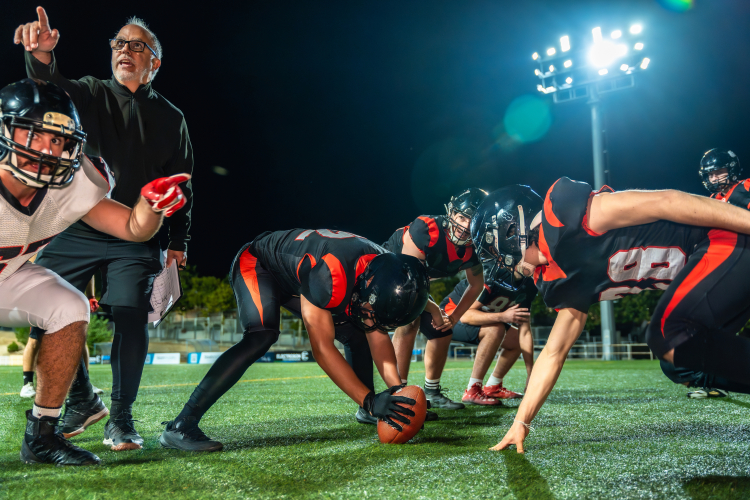
Concussion is on a par with an ongoing shortage of volunteers as the biggest threat to community sport, South Australian Sports Medicine Association (SASMA) CEO Danielle Grant-Cross says.
Ms Grant-Cross says GPs have a critical role in the diagnosis and management of concussion, from the initial knock and suspected injury to rehabilitation and reviews.
‘We encourage sporting clubs to develop close relationships with their local doctors and health professionals,’ she says. ‘When consulting a GP, it’s important to bring as much information as possible about the mechanism of the head knock, any documentation of the symptoms at the time and a copy of their sports concussion protocol.’
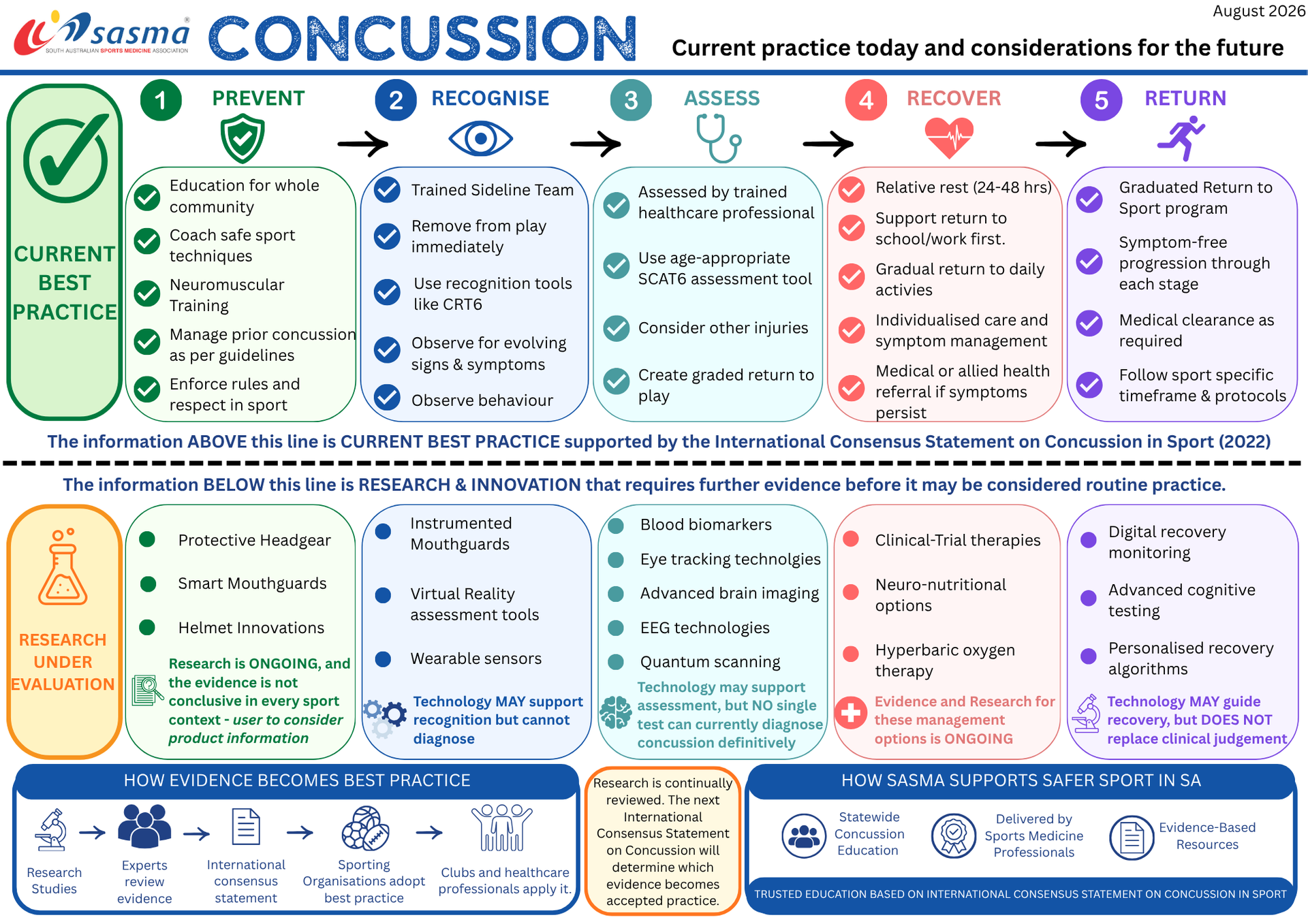
Among other concussion-related information and resources, SASMA has developed a one-page infographic aiming to help everyone involved in concussion management identify the symptoms and help players recover and return to play when ready (see below).
The one-page flyer aims to help parents and others to understand what they should do if an athlete of any age receives a head injury, particularly while the international sports community awaits publication of the next version of the international ‘Consensus statement on concussion in sport’ expected in 2027.
Ms Grant-Cross is speaking about SASMA’s ground-breaking work at the International Sports Concussion Conference in Melbourne from 7 to 9 September. Four days after she speaks, the San Francisco 49ers and Los Angeles Rams will play the first regular-season National Football League (NFL) game in Australia, at the Melbourne Cricket Ground.
The seventh ‘Consensus statement’, which will be released after the conference, will reflect recent research and mounting evidence about concussion and guide governments and sports bodies around the world – including the Australian Institute of Sport, Australian Football League and Australian Rugby Union – in updating their management protocols.
Ms Grant-Cross says she has written to the Minister of Recreation and Sport and the Minister of Health outlining the concerns of her members about the ramifications of concussion on sport – from the willingness of parents to allow their children to play contact sport, to attracting doctors and other health practitioners to monitor games, to potential rule changes in sport, to insurance parametres and potential future litigation concerns.
‘We already have parents moving their children away from playing contact sport and certain sports,’ she says. ‘As awareness of sports-related concussion increases, there is a real possibility that some games will have to change if they want to attract young players.’
Later this month, Ms Grant-Cross will speak at the International Sports Concussion Conference 2026 – another global gathering about the issue – in Melbourne, presenting on sideline safety, developing and delivering a statewide community concussion education program.
American researchers speaking at the Conference are suggesting children under 18 should not be involved with tackling and sports where head knocks are prevalent at practice and in games, following increasing evidence suggesting repeated head knocks over a long period can cause chronic traumatic encephalopathy (CTE), a progressive brain disease that can be caused by repeated concussions – but cannot be diagnosed until after death, as seen in some NFL players.
In the Spring edition of medicSA, Dr Marc Cesana of the Adelaide Football Club and other sports medicine experts discuss the challenges of managing concussion and its potential impacts on participation in contact sports.